A life in scholarship
David Roy Simmons MBE (6 September 1930 – 30 November 2015) — Māori name Rawiri Te Puru Terehou — was one of New Zealand’s foremost ethnologists and a dedicated scholar of Māori culture, art, and history. Over a career spanning more than two decades at the Otago Museum and Auckland War Memorial Museum, he reshaped scholarly understanding of Māori migration, tattooing, carving, and place names.
Biography
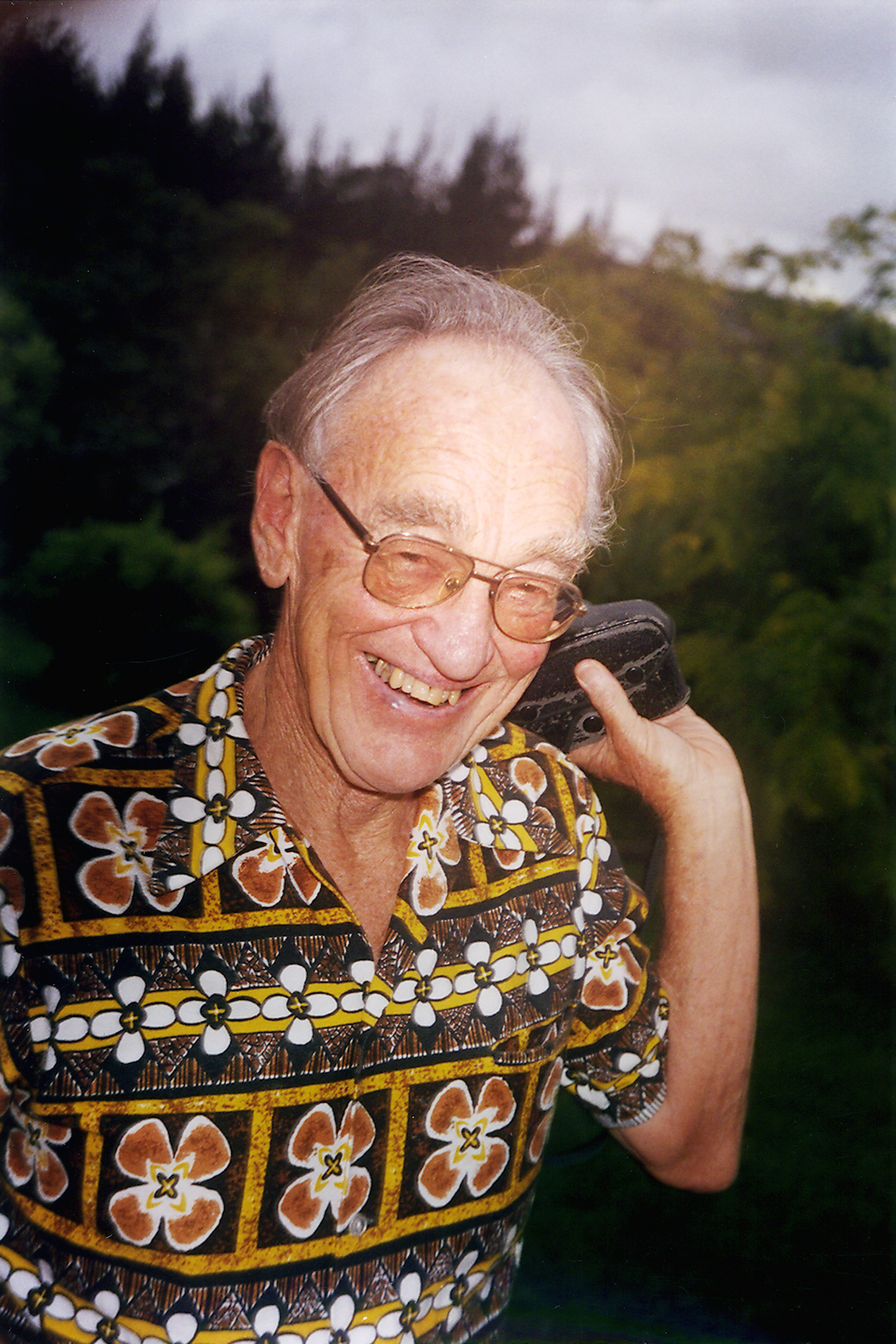
David Roy Simmons was born on 6 September 1930 in Auckland, New Zealand. His Māori name was Rawiri Te Puru Terehou. He was raised in Auckland and attended Sacred Heart College for his secondary education before embarking on an unusually broad academic journey spanning New Zealand and France.
In 1955 he married Winifred Mary Harwood; she predeceased him in 2003. They had two sons, Christopher and Nigel, and three grandchildren — Luke, Jason, and Michelle. Simmons lived in Remuera, Auckland, for much of his adult life, and was buried at Purewa Cemetery, Auckland, following his death on 30 November 2015 at the age of 85.
Beyond his formal scholarly output, Simmons was described by colleagues as a meticulous researcher whose command of both Māori oral tradition and European documentary sources set him apart. His willingness to challenge accepted narratives — particularly Percy Smith’s long-dominant ‘Great Fleet’ theory — marked him as a scholar of genuine intellectual courage.
Education
Simmons received one of the most internationally diverse educations of any New Zealand scholar of his generation, studying across eight institutions in New Zealand, Paris, and Brittany over more than a decade.
| Institution | Location | Period / qualification |
|---|---|---|
| Sacred Heart College | Auckland | Secondary |
| Auckland Teachers' College | Auckland | 1948–1950 (graduated 1950) |
| Auckland University College | Auckland | 1949 |
| Victoria University College | Wellington | 1951–1953 |
| École du Louvre | Paris | 1954 |
| Sorbonne — Diplôme Supérieur des Études de Civilisation Française | Paris | Graduated 1955 |
| Université de Rennes — Diplôme des Études Celtiques | Brittany | Graduated 1957 |
| University College of Auckland — BA | Auckland | Graduated 1958 |
| University of Auckland — MA | Auckland | Graduated 1960 |
His Sorbonne and Rennes diplomas reflect a deep engagement with European scholarship at a time when few New Zealand academics sought training in France. The Celtic studies diploma at Rennes was unusual for a Māori scholar, but speaks to Simmons’ broader comparative interest in indigenous oral traditions and their relationship to written historiography.
Career
Simmons began his museum career in 1959 when he was appointed Keeper in Anthropology at the Otago Museum in Dunedin — a position he held while completing his MA at the University of Auckland in 1960. This combination of institutional employment and continuing study typified his approach to scholarship: rigorous, patient, and never satisfied with a partial answer.
In 1968 he was appointed Ethnologist at the Auckland Institute and Museum (now Auckland War Memorial Museum), the institution with which he would be most closely associated. Four years later, in 1972, he was elevated to Assistant Director — one of the most senior curatorial roles in New Zealand’s museum sector. He held this position until his retirement in 1986.
During his eighteen years at Auckland Museum, Simmons produced some of his most important scholarly work. His 1969 article demolishing the ‘Great Fleet’ hypothesis appeared while he was still finding his feet in Auckland; by the mid-1970s he had expanded this into the landmark 504-page monograph The Great New Zealand Myth (1976). He also built the museum’s Māori collections, contributed to exhibition design, and mentored a generation of younger researchers.
Key career appointments
| Year | Position | Institution |
|---|---|---|
| 1959 | Keeper in Anthropology | Otago Museum, Dunedin |
| 1968 | Ethnologist | Auckland Institute and Museum |
| 1972 | Assistant Director | Auckland War Memorial Museum |
| 1984 | Co-curator, Te Maori international exhibition | Auckland War Memorial Museum / Metropolitan Museum of Art |
| 1986 | Retired from Auckland War Memorial Museum | — |
| 2013 | Associate Emeritus | Auckland War Memorial Museum |
Te Maori Exhibition (1984–1987)
The pinnacle of Simmons’ curatorial career was his co-curation of Te Maori — the landmark international touring exhibition that brought Māori taonga to audiences across the United States before returning home to New Zealand. Organised alongside Douglas Newton of the Metropolitan Museum of Art and Hirini Moko Mead, the exhibition opened at The Metropolitan Museum of Art in New York in 1984.
The exhibition was the first of its kind: a major presentation of Māori art and cultural objects outside New Zealand, designed not merely as an anthropological display but as a living affirmation of Māori identity and artistry. It toured American museums for three years, drawing enormous crowds and critical acclaim, before returning to New Zealand in 1987 as Te Hokinga Mai (The Coming Home).
The impact of Te Maori on the global recognition of Māori art and culture cannot be overstated. It fundamentally shifted how international audiences understood Māori taonga — not as ethnographic curiosities but as works of profound artistic and spiritual significance. For Simmons, it was the synthesis of a career: his deep knowledge of artefact history, his relationships with iwi, and his ability to convey that knowledge to international audiences.
Awards & honours
| Year | Award | Awarding body | Citation |
|---|---|---|---|
| 1978 | Elsdon Best Memorial Medal | Polynesian Society | For outstanding contribution to Polynesian studies. |
| 1985 | Member of the Order of the British Empire (MBE) | Queen's Birthday Honours | For services to ethnology and the Māori people. |
| 2013 | Auckland Museum Medal | Auckland War Memorial Museum | Awarded to 'an outstanding scholar and student of Māori art and culture'. |
| 2013 | Associate Emeritus | Auckland War Memorial Museum | Appointed in recognition of his lifelong contribution to the museum. |
Further reading within this archive
- Works — his thirteen major publications and the Te Maori curation, with full bibliographic detail.
- Timeline — a year-by-year chronology from 1930 to 2015.
- References — sources drawn on for this archive.